
Key Takeaways
- Hair thinning during menopause is common and linked to declining estrogen and progesterone. These hormones sustain the hair's growth phase, so their decline shortens it and can lead to thinner-looking hair.
- Several treatments can help, from topical minoxidil to off-label medications. Options like spironolactone and finasteride work by blocking DHT, an androgen linked to hair follicle shrinkage.
- HRT's effect on hair is mixed. Some studies show improvement, but certain progestins may worsen hair thinning due to their androgen-like effect.
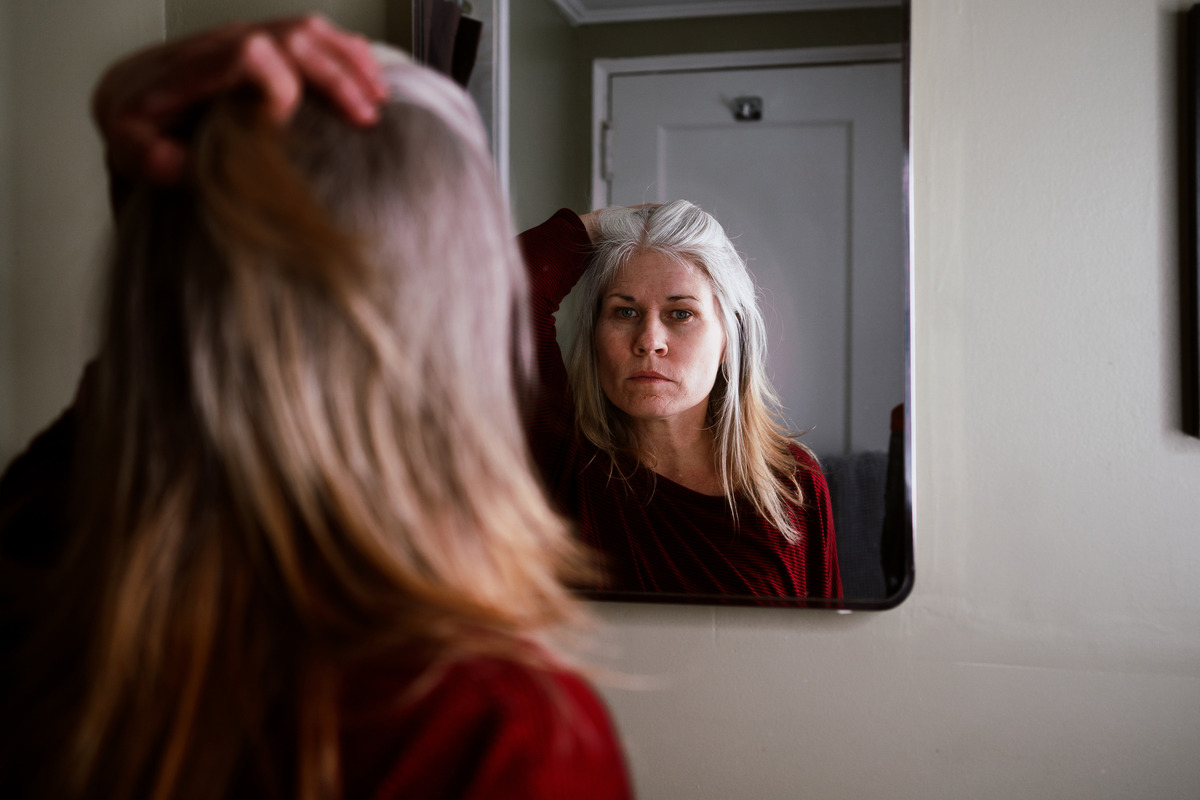
If you’re noticing more hair in your brush or in your shower drain, don’t panic. Hair thinning is a normal, expected part of aging. In fact, a 2022 study found approximately 52% of 178 postmenopausal women experienced hair loss. Hormonal shifts often play a key role—particularly the decline of estrogen and progesterone that you experience in menopause.
Like many other menopause symptoms, hair thinning is treatable and manageable. Here’s a guide to hair thinning menopause treatments, including the potential benefits of hormone replacement therapy (HRT).
Understanding hair thinning due to menopause
Menopause is a time of change. As you progress through the menopause transition, estrogen and progesterone levels settle at a lower baseline. These changes disrupt your hair's growth cycle, which normally looks like this:
- Growth (anagen): This is your hair’s active growth phase, generally lasting anywhere from two to seven years.
- Transition (catagen): In this short transitional phase, hair follicles shrink.
- Resting (telogen): Hair remains attached to the follicle, but no new hair grows. This phase generally lasts a few months.
- Shedding (exogen): Old (resting) hair detaches from the follicle and falls out, making room for new hair to grow.
Estrogen and progesterone help sustain the anagen (growth) phase. As your body produces fewer of these hormones, the growth phase can shorten. That means more hair enters the telogen (resting) phase sooner. With time, this can contribute to thinner-looking hair.
But there are some other factors that could affect hair growth during menopause. For example, progesterone helps limit the effects of dihydrotestosterone (DHT), an androgen that promotes hair follicle shrinkage. Progesterone decline may leave hair follicles vulnerable to DHT exposure.
Beyond menopause: What else drives hair thinning?
Unrelated factors can also contribute to hair thinning as you age, such as:
- Thyroid dysfunction: An underactive thyroid (hypothyroidism) or an overactive thyroid (hyperthyroidism) can disrupt the hair growth cycle. That’s because it’s regulated by certain hormones that the thyroid produces.
- Nutrient gaps: Certain nutrient deficiencies are associated with hair thinning. These include deficiencies in iron, zinc, and vitamin D.
- Inflammation: Chronic inflammation can dysregulate the growth cycle, shortening the anagen phase.
- Medications: Your doctor may prescribe medications with hair thinning as a side effect.
- Genetics: Genes play a key role in hair thickness. Some women are naturally more predisposed to female pattern hair loss (FPHL) than others.
How to stop hair thinning during menopause
While stopping hair thinning altogether may not be possible, there are interventions that can help:
- Topical minoxidil is FDA-approved to treat FPHL. Its key function is prolonging the anagen phase by supporting blood flow. There’s also oral minoxidil, but it’s not FDA-approved for FPHL.
- Spironolactone was originally developed as a diuretic, which makes people urinate more often. But doctors sometimes prescribe it off-label for FPHL. It works by blocking the effects of certain androgens, such as DHT. For hair follicles, blocking DHT prevents shrinkage.
- Oral finasteride is FDA-approved for male pattern hair loss. Doctors often prescribe it off-label for FPHL. It works by blocking the conversion of testosterone into DHT.
- Dutasteride, like oral finasteride, blocks the conversion of testosterone into DHT. It’s not FDA-approved for FPHL, but doctors may prescribe it off-label for this purpose.
Lifestyle habits
Lifestyle shifts can also make a meaningful difference. Here are some to consider:
- Diet: Give your body the nutrients it needs to support your hair’s natural growth cycle. Consider getting a licensed dietitian in your corner who can place you on the right diet for your needs.
- Stress management: Keeping your stress levels in check can regulate your hair’s growth cycle. This might mean regularly exercising, practicing mindfulness, or spending time outdoors—whatever makes you feel calm.
- Sleep: Poor sleep affects your hair in multiple ways, from dysregulating key hormones to driving inflammation. Take steps to support restful sleep, like working with a sleep coach or taking medications.
- Scalp care: Everyday actions that you might not think twice about can contribute to thinning, from tying hair too tightly to using excessive heat. Be gentle on your hair and scalp.
Can HRT help prevent hair thinning?
HRT is an evidence-based menopause intervention. It works by supplementing the hormones that naturally fluctuate and decline during this stage of life. According to The Menopause Society, it’s the most effective treatment for various common menopause symptoms, such as:
- Hot flashes
- Night sweats
- Vaginal dryness
- Urinary urgency
Can HRT help your hair, too? It’s hard to say because the research is mixed. In a small 2023 study, researchers tracked 11 postmenopausal women using HRT over six months. On average, participants' frontal hairlines meaningfully improved, reflecting a fuller-looking appearance. Plucking strength improved, too—meaning hair was more firmly anchored in the follicle and less prone to falling out (specifically in the telogen phase).
But the opposite can happen, too. Some HRT medications, such as Provera® and Activella®, contain synthetic hormones called progestins. Certain progestins have a structure that’s more similar to androgens. Androgens are sex hormones like testosterone.
Androgens affect many bodily functions, one of which is hair growth. High androgen levels can cause hair growth in unwanted places, like the chest or back. This excess is also associated with male-pattern hair loss. Androgenic progestins may cause these same side effects.
When to seek hair loss care
There’s no single right time. If you’ve noticed a change in your hair’s density, bring it up with your doctor. By identifying the root cause, they’ll place you on the right path forward for your body and goals.
Experience personalized menopause symptom treatment with Maven Clinic
Hair thinning represents just one thread in your menopause story. Shifts in your hormonal environment can show up in multiple ways, from disturbing your sleep to fogging up your brain. Day-to-day life can take a real hit.
Maven Clinic offers whole-person care to manage your symptoms effectively. "Navigating perimenopause has been difficult. I was having symptoms, but my physical and labs came back normal,” a Maven Clinic patient, Alison, explains. “After speaking with a Maven provider, I felt like someone understood what I was going through and that I wasn’t crazy!”
Our team is available to guide you through this complex stage of life. Discover our approach to hormone care.
"Navigating perimenopause has been difficult. I was having symptoms, but my physical and labs came back normal. After speaking with a Maven provider, I felt like someone understood what I was going through and that I wasn't crazy!"

"The holistic view and approach for managing perimenopause and menopause has been life-changing! Nearing 50, I am in the best physical shape with support from the physical support and nutrition coaches."

"I started using Maven because I was looking for answers and support during perimenopause. What stood out immediately was how understood I felt. The providers didn't dismiss my symptoms, they helped me make sense of the changes happening in my body and gave me practical, personalized support."

.jpg)
.jpg)