Key Takeaways
- Declining estrogen during menopause shortens hair's growth phase and leaves follicles more vulnerable to DHT, contributing to thinning and shedding.
- HRT can help by restoring hormones that protect follicles. Still, results vary as it may improve hair density for some women while worsening thinning for others, especially if testosterone is included in the formulation.
- Additional treatments like minoxidil, anti-androgen medications, and targeted nutrition can support hair regrowth alongside HRT, with a personalized approach working best since hair loss often has multiple causes.
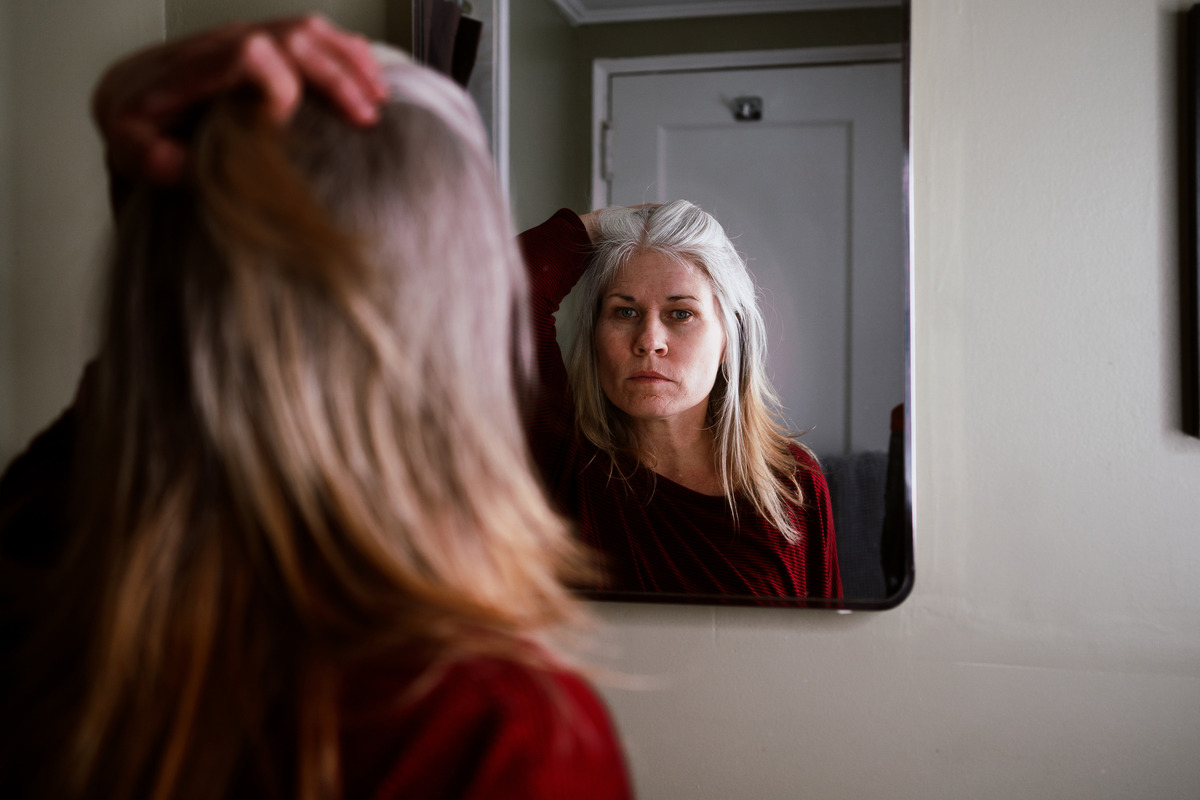
Hormonal fluctuations during menopause do more than just trigger insomnia and heat flashes. For some, these shifts lead to a deeply distressing symptom: hair loss. This leads many to wonder, “Can hormone replacement therapy (HRT) work for hair loss?”
To answer that question, we must trace how hormone fluctuations directly alter follicle health. This guide maps that relationship, details how HRT interacts with the natural hair cycle, and explores both medical and lifestyle strategies to preserve hair density.
How do hormones affect hair loss during menopause?
To understand how menopause impacts your scalp, it helps to look at how hair grows.
The hair growth cycle
Hair follicles go through a continuous growth cycle, moving through three main phases: growth (anagen), transition (catagen), and resting (telogen).
Some researchers add a fourth phase, shedding (exogen). They separate resting from shedding because losing hair isn’t a passive process. In fact, it’s an active, chemically regulated process where the follicle releases its anchor on the strand. Pinpointing this distinction helps scientists figure out whether a hair loss treatment needs to keep hair from entering the resting phase too soon or simply prevent premature shedding.
How shifting hormones during menopause disrupt hair growth
Hormonal changes directly affect this growth cycle. During perimenopause (the phase before menopause), estrogen and progesterone levels fluctuate unpredictably before stabilizing at a lower baseline after menopause. Declining estrogen means your hair spends less time in the growth phase, and lower progesterone means your follicles shift prematurely into the resting and shedding phases. Both of these can lead to reduced hair density over time.
Beyond disrupting the growth timeline, this hormone loss triggers a domino effect across your entire scalp environment, including:
- Androgen sensitivity: Women have a baseline of male hormones (androgens). Female hormones (estrogen and progesterone) normally act as a shield, blocking the effects of dihydrotestosterone (DHT)—the potent androgen that shrinks hair roots. But when your female hormones decline, that shield vanishes, leaving your follicles vulnerable to DHT exposure and hair thinning.
- Reduced blood flow: Estrogen supports healthy blood vessel function and efficient circulation. When levels drop, blood flow to the scalp can slow down, meaning your hair follicles receive fewer nutrients they need to support healthy growth.
- Decreased scalp oils: Estrogen also helps regulate oil (sebum) production, which keeps your hair lubricated and protected. As estrogen declines, oil production may decrease too, leaving hair dry and brittle. Without that moisture, each strand’s outer layer roughens and appears finer, making thinning look more noticeable even if you aren’t losing more hair.
- Symptom-driven shedding: Hormone fluctuations during menopause often trigger lifestyle disruptions like chronic insomnia or high stress. Sustained poor sleep raises your body’s stress hormone (cortisol) levels, which can shock your hair follicles, pushing them into the resting phase and increasing shedding.
Will HRT help with hair loss?
Because HRT works by restoring the estrogen and progesterone that decline during menopause, it can help recreate a protective environment and slow down hair loss. However, HRT primarily targets general menopausal symptoms, like night sweats and mood instability, rather than focusing on hair regrowth.
This makes the relationship between HRT and hair growth complex. According to research published in the International Journal of Women’s Dermatology, HRT may improve hair density for some women, but clinical evidence remains limited. For others, HRT can actually have the opposite effect and worsen thinning.
The outcome depends heavily on your specific hormone formulation and whether your doctor includes testosterone in your regimen. Because testosterone converts to DHT, adding it to your routine can sometimes inadvertently fuel the very hormone responsible for shrinking your follicles.
If you’re on HRT and have concerns about hair loss, or if you’re considering starting hormone therapy, speak with your doctor. They can tailor your care plan and HRT formulation to manage your symptoms while keeping your hair goals in mind.
Other hair loss treatments to discuss with your doctor
Your doctor might recommend a dedicated hair growth intervention alongside HRT. Here are a few possible options.
Vitamins
Vitamin deficiencies are common in menopause and may contribute to hair loss. Vitamin D helps by binding to receptors in follicle cells, nudging dormant follicles back into an active growth phase. B vitamins (like B12) work differently—they help create red blood cells, which carry oxygen and nutrients to your scalp. Each targets a different root cause, but both support the conditions your follicles need to grow. With daily use most people see reduced shedding and modest new growth along the hairline or part after two to three months.
Minoxidil (Rogaine®)
This medication works by widening blood vessels near the follicle, which increases blood flow and delivers more oxygen and nutrients to support active hair growth. It’s applied directly to the scalp and available without a prescription. People typically see results after four months of routine use.
Spironolactone (Aldactone®) or finasteride (Propecia®)
These anti-androgen medications work by blocking DHT from attaching to your hair follicles, shrinking them, and cutting them off from nutrients. By shutting down that hormone’s access, these medications keep your follicles thicker and healthier. They’re typically taken as a daily prescription pill, though they may also be applied topically. It usually takes 12–16 weeks of daily use to begin seeing effects.
Ketoconazole (Nizoral®)
This medicated antifungal shampoo works by reducing scalp inflammation and disrupting DHT production. It also clears away fungal buildup. When left unchecked, fungus feeds on scalp oils and leaves irritating byproducts that trigger inflammatory shedding. Clearing this buildup restores the skin barrier and anchors hair follicles securely in their growth phase. You can buy this shampoo either over-the-counter or as a stronger prescription. Noticeable results typically occur after three to four months of consistent use.
Nutrition
A nutrient-rich diet gives your body the building blocks it needs to produce strong hair keratin. Working with a nutrition coach can help you target the proteins, fats, and minerals your body needs to fuel active growth. It typically takes three to six months of consistent dietary changes to see new growth.
Because hair loss can stem from so many different causes—hormonal, genetic, and lifestyle-related—no single treatment works for everyone. A whole-person approach looks at all of these factors so your care plan reflects what’s actually driving your symptoms.
What should you ask your specialist?
You need confidence in your care. Whether you’re seeing a new specialist or your regular doctor, here are some questions you might raise in your appointment:
- Experience: How much experience do you have managing menopause-related hair loss?
- Referral: Should I see another specialist, or is managing this with you sufficient?
- Cause: Could something other than menopause cause my hair loss, like lifestyle, diet, or medications?
- Timeline: How long will it take to see hair growth results from my HRT formulation?
- Nonhormonal interventions: Should I consider a dedicated hair regrowth solution alongside HRT?
- Lifestyle interventions: Which lifestyle changes would make the biggest difference for my hair?
- Risk: What side effects should prompt me to contact you during treatment?
Take control of your menopausal hair loss
Reclaiming your hair health starts with understanding your unique hormonal profile—not following generic recommendations. You deserve a dedicated care team that stays by your side as your symptoms change and your questions evolve, long after you fill a prescription.
At Maven Clinic, we take a whole-person approach to hormone care built around women’s real lives. That’s why so many women trust us with their care. Learn more about our approach to hormone therapy.

"Navigating perimenopause has been difficult. I was having symptoms, but my physical and labs came back normal. After speaking with a Maven provider, I felt like someone understood what I was going through and that I wasn't crazy!"

"The holistic view and approach for managing perimenopause and menopause has been life-changing! Nearing 50, I am in the best physical shape with support from the physical support and nutrition coaches."

"I started using Maven because I was looking for answers and support during perimenopause. What stood out immediately was how understood I felt. The providers didn't dismiss my symptoms, they helped me make sense of the changes happening in my body and gave me practical, personalized support."
FAQ
Which hormone deficiency causes hair loss?
Declining estrogen most often drives hair loss during the midlife transition. This hormone actively supports blood flow to the scalp and extends the hair’s growth phase. When your body produces less estrogen, the growth phase cuts short and shedding accelerates.
However, a single factor rarely causes hair loss. Shifting progesterone and thyroid hormones, alongside an excess of cortisol, can all accelerate thinning. Your doctor can help identify the hormonal changes causing your hair loss.
How does HRT help with thinning hair?
Doctors rarely prescribe HRT solely for hair thinning. However, the treatment does support follicle health by replacing the hormones that drop during menopause. Understanding the relationship between hair loss and estrogen replacement reveals how the treatment preserves hair density. When estrogen levels fall, follicles lose their defenses against DHT. Introducing estrogen through HRT restores a powerful buffer against DHT, extending the active growth phase to prevent premature shedding.
Is HRT safe?
For most people, yes—but the answer depends on your individual health history. Doctors view HRT as a safe and effective option when they carefully prescribe and monitor the treatment. But because the therapy doesn’t suit everyone, your care team will walk you through the risks and benefits based on your unique health picture.
.jpg)


.jpg)