
For decades, two critical areas of reproductive healthcare have faced a similar problem: responding to setbacks rather than anticipating them.
In IVF, clinicians have had limited information to predict which embryos are most likely to result in a successful pregnancy. In maternity care, serious complications such as preeclampsia can develop in patients who appeared healthy just weeks earlier.
"For us on the physician side... we are very reactive,” said Dr. Debbra Keegan-Nichols, Chief Medical Officer at CCRM Fertility. “The problem presents itself, and we need to react to it. We don't know that it's going to go bad until it's already wrong, and that's when all these things start happening with the patient."
But advances in genomic testing and predictive screening are beginning to change what's possible.
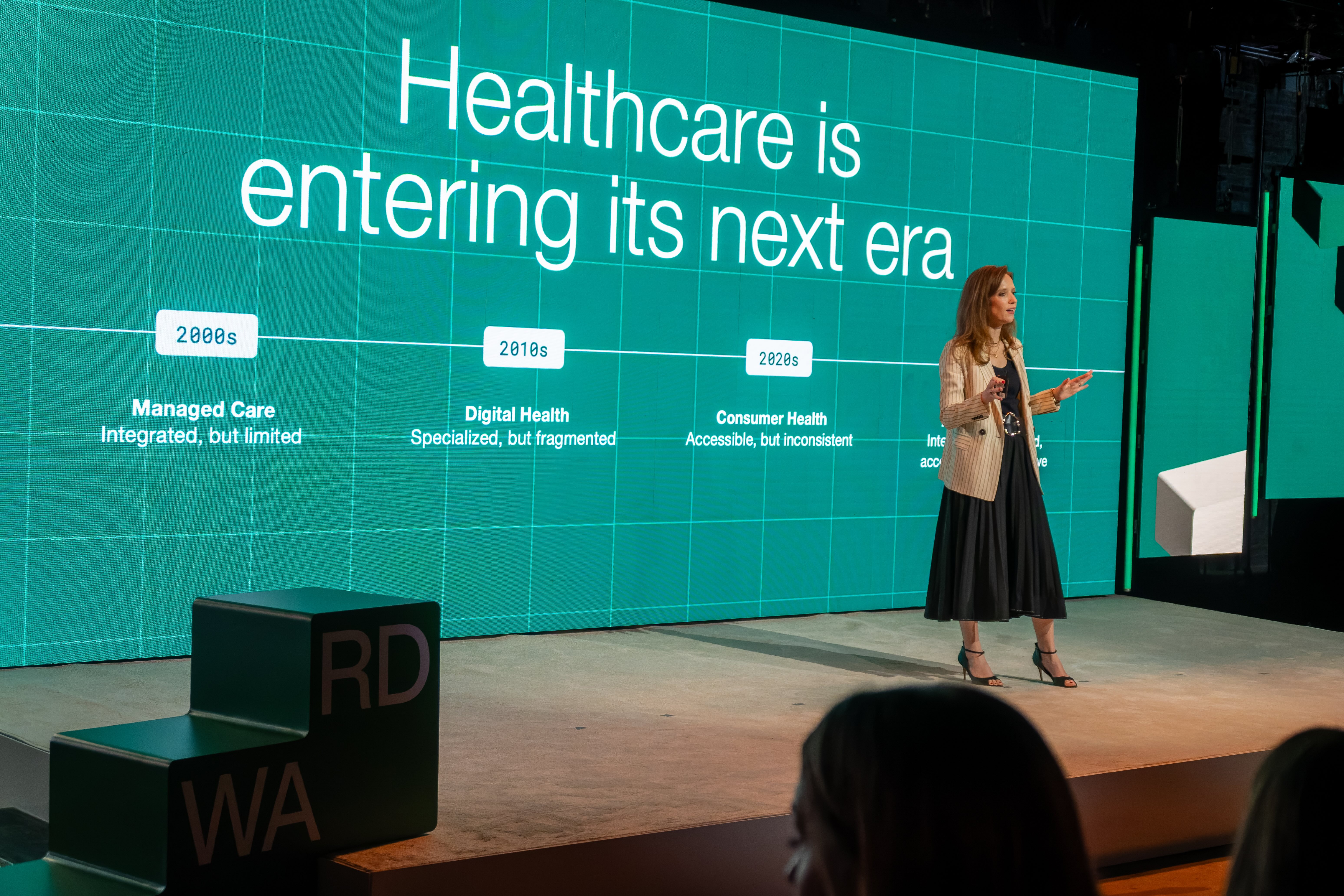
At Maven's inaugural Onward conference, Jeremy Grushcow, co-founder of Juniper Genomics, and Maneesh Jain, co-founder and CEO of Mirvie, joined Keegan-Nichols to discuss how more precise biological data could improve decisions from embryo selection to pregnancy.
Read more from Onward:
- Olivia Munn on breast cancer, fragmented care, and what it took to connect the dots
- Metabolic health, ROI, and the role of AI in healthcare: 4 trends shaping the next decade of women's health
- How Maven, Color, and Wellthy create real platform integration to support the full spectrum of care needs
- How GLP-1s fit into a more connected approach to women’s and metabolic health
- How continuity of care changed the healthcare experience for these Maven members
Juniper is developing more comprehensive genetic testing to help explain embryo failure and inform IVF decisions. Mirvie uses molecular signals from a maternal blood test to identify elevated risk of pregnancy complications, including preeclampsia, before symptoms develop.
For employers investing in fertility and high-risk pregnancy benefits, the discussion raised an important question: how can earlier information translate into better care, fewer complications and less time spent navigating unsuccessful treatments?
Why better data matters more than traditional risk factors
Even with today's embryo testing, IVF outcomes remain difficult to predict. Grushcow explained that the current standard approach — preimplantation genetic testing for aneuploidy (PGT-A) — examines whether an embryo has the correct number of chromosomes. That information helps clinicians avoid transferring embryos with certain chromosomal abnormalities, but it cannot account for every reason an embryo might fail to develop.
Grushcow described the journey in stark terms: "You see 20 retrieved eggs turn into 15 fertilized eggs turn into maybe five blastocysts that make it through that week." And, from there, only one embryo gets transferred at a time.
According to figures discussed by the panel, selecting embryos using current testing approaches results in a live birth rate of approximately 52% per first transfer. The problem with these traditional approaches, Grushcow argued, is that checking chromosome numbers tells clinicians relatively little about the thousands of genes involved in human development.
“The question we ask right now with PDTA preimplantation genetic testing is: Does that embryo have the right number of chromosomes? All of us in this room almost certainly have 46 chromosomes. So if [the embryo has] the wrong chromosomes, you don't make it to a live birth,” Grushcow explained. “So the idea is, let's check the books on the shelf. Are all 46 volumes of those books on the shelf, because if they're not, that embryo is very unlikely to succeed.”
Juniper is taking a more comprehensive approach to embryo genetics, looking beyond chromosome count to identify other genetic factors that may affect development. The aim is to give clinicians more information when selecting embryos and help explain repeated failures that might otherwise remain unexplained.
“Juniper is taking all those books off the shelf, and we truly do cover to cover,” Grushcow said. “The question is: is there a typo somewhere in those 3 billion bases of the human genome that will prevent that embryo from successfully developing?”
A similar information gap exists in maternity care. Jain explained that rates of preeclampsia have doubled over the past 15 years, with the condition now affecting almost one in ten pregnancies. Yet many patients who develop it have no obvious risk factors early in pregnancy.
Traditional screening relies heavily on medical history and demographic characteristics, including age and race. These can identify some higher-risk patients, but Jain described how they fail to predict many cases among people who initially appear healthy.
“There is really a lot of ambiguity, and so very few physicians are actually recommending preventive care [for preeclampsia]," Jain said. “The issue is not only are we poor at predicting [preeclampsia] based on risk factors — [that leads to] admission to the hospital, preterm delivery, cesarean section, blood transfusions, and a whole host of complications.”
Mirvie's approach uses molecular information from a blood test to identify biological signals associated with the development of preeclampsia months before symptoms appear. Rather than relying primarily on population-level characteristics, the technology aims to give clinicians a more individualized assessment of risk.
What changes when patients have a clearer answer?
For Grushcow, more comprehensive genetic information isn't simply about choosing an embryo. It can also help patients understand why previous fertility treatments haven't worked.
Grushcow recalled one patient who "changed clinics three times. She did three different cycles, three different labs, getting the same result every single time" before genetic testing finally explained why.
Grushcow described how a genetic explanation can give people "permission for them to stop blaming themselves" and consider a different route toward their goal of having a child.
The same principle applies to pregnancy risk, although the decisions involved are different. Jain highlighted a significant problem with existing preeclampsia prevention: even when preventive measures are available, patients don't always receive or follow the recommendations.
He estimated that fewer than 10% of eligible patients complete the recommended preventive steps under conventional risk-identification approaches. One reason, he suggested, is that generalized demographic risk factors can feel unconvincing to both clinicians and patients – but an individualized result can change that conversation.
"We've now seen over 90% adherence once you have a result," Jain said, explaining that objective evidence of their elevated risk can make patients more willing to follow a recommended plan. That plan might include clinician-directed aspirin use and blood pressure monitoring, with the aim of reducing the likelihood or severity of complications.
Jain also addressed concerns that identifying risk months in advance might create unnecessary anxiety. His experience suggested that patients respond differently when an elevated-risk result comes with clear steps they can take.
The distinction is important. Predictive information isn't a diagnosis or a guarantee of what will happen. Its value lies in helping clinicians and patients make more informed decisions while there is still time to act.
For Maven, that connects directly to the role of coordinated fertility and high-risk pregnancy care. A result needs to be understood in the context of someone's wider health and translated into appropriate next steps, with a Care Team helping members navigate specialists, recommendations, and ongoing support.
The economics of predicting problems earlier
The potential benefits of more predictive care extend beyond clinical outcomes. Both speakers argued that earlier, more accurate information could also reduce the financial burden of fertility treatment and pregnancy complications.
In IVF, Grushcow pointed out that the cost of an unsuccessful embryo transfer is rarely limited to the procedure itself. Patients who experience repeated failures may change clinics, undergo additional cycles or consider alternatives such as donor eggs or surrogacy. Each decision can introduce further expense, alongside the emotional impact of unsuccessful treatment.
"It's not just the direct cost of the transfer," he explained. “IVF forces us to confront every single one of those failures. They’re on a sort of journey of loss. But we’re not built for that as humans.”
Better embryo selection could therefore help reduce unnecessary treatment and give patients a clearer understanding of their options earlier in the process, helping to reduce the financial and mental strain.
For Mirvie, the economic case centers on identifying pregnancy complications before they require more intensive care. Jain discussed evidence that appropriate preventive action can substantially reduce serious outcomes, citing research indicating a reduction of around 70% in neonatal intensive care unit (NICU) stays under the studied intervention.
For benefits leaders, however, the important distinction is between the potential value of a test and the outcomes achieved when that test is integrated into care. Identifying elevated risk is only the beginning. Someone must communicate the result, determine the appropriate intervention, coordinate follow-up and make sure the patient understands what happens next. Without that process, even highly sophisticated screening may have limited practical impact.
What this means for employers
In fertility treatment, better genetic information may help clinicians make more informed embryo-selection decisions and give patients explanations for repeated failures. During pregnancy, more individualized risk screening may help identify complications early enough for preventive measures to make a difference.
Neither technology eliminates uncertainty. But both aim to give patients and clinicians more useful information at a point when decisions can still influence what happens next.
For employers evaluating genomic testing, preeclampsia screening and other predictive technologies, that suggests looking beyond the accuracy of the test itself. The questions are also about what follows: who explains the results, how quickly patients can access appropriate specialists, what preventive care is available and who remains responsible for coordinating the next steps.
This is where connected care becomes particularly important. Maven's fertility and high-risk pregnancy programs are designed to help members navigate complex decisions and access support as their needs change, rather than leaving them to manage each new result or referral alone. Predictive technology may help healthcare move further upstream, but the greatest opportunity is combining earlier answers with timely, coordinated action.
Contact Maven to explore how comprehensive fertility and maternity benefits can support employees through complex reproductive health journeys.
Ready to get started with Maven?
See how Maven can support working families, retain talent, and reduce costs