

While a growing benefits ecosystem can give employees access to more specialized care, having more options doesn't necessarily create a more connected experience. When different needs are handled by separate vendors, platforms, and care teams, employees still need to work out where to go and how to get support.
For benefits leaders, that creates an important distinction between offering multiple high-quality solutions and building a platform that actually connects them. True integration isn't about putting more services in one place; it's about making it easier for people to access the expertise they need without having to connect the pieces themselves.
“When we started Color, we were very much a scientifically oriented company, and that thread still lives through the company. But over time, what [we saw] in the healthcare industry is just how much access is a core challenge,” said Othman Laraki, co-founder and CEO of Color Health, a virtual cancer care company.
Laraki joined Maven founder and CEO Kate Ryder and Wellthy founder and CEO Lindsay Jurist-Rosner onstage at Maven's inaugural conference, Onward, to talk through those access gaps, and how a genuine integration can close them and create a better experience for members.
The problem: point solutions dressed up as a platform
Color and Wellthy partner to provide cancer care and caregiving resources, respectively, alongside the full suite of women’s and family health benefits through Maven. Aligning these complex care journeys can ease stressful moments for employees during challenging times, Jurist-Rosner said.
Read more from Onward: Metabolic health, ROI, and the role of AI in healthcare: 4 trends shaping the next decade of women's health
“All of us are caregiving in our own way, and that’s consuming so much time and energy and money and stress, and we do it in our own silos,” Jurist-Rosner said. “I got very obsessed with this idea of creating support and infrastructure where, frankly, it just doesn't exist.”
Aligning Wellthy’s caregiving support with the clinical care offered through Color and Maven enables all three platforms to build on their own expertise, and provide full-spectrum support to members, patients and caregivers.
“The healthcare world is prescribing and diagnosing — all the wonderful work Color and Maven are doing,” Jurist-Rosner said. “And then on our side of the world, it’s everything that happens in the home. If somebody comes to us looking for this, they'll likely also need help with that. Being able to provide those tools at the fingertips of our team feels like a major moment.”
Employers have already spent years adding targeted health benefits to address gaps in traditional healthcare. But more vendors isn’t the answer — the right partnerships will foster a better care experience, while saving employers money and improving ROI. “The costs are beyond the breaking point,” Laraki said. “There's a real need to figure out long-term solutions to provide high-quality care that is also affordable, and to serve [employees] all the way down the rabbit hole.”
For these three platforms, that means supporting a working mother dealing with caregiving, a cancer diagnosis, and her future fertility decisions. Or, it’s supporting a woman looking for care for an elderly parent, while managing her own perimenopause symptoms. Effective integration should allow people to move between different areas of care with continuity — preserving the expertise of each provider and the member’s health history without making the member manage the connections between them.
“When someone goes through a cancer diagnosis, obviously it's like a ton of bricks that falls on a person and their family, followed by a huge wave of confusion and uncertainty,” Laraki said. “Having teams that are working together like this, making sure that you are aware of the options, and having a rapid follow up to make sure that if you want to keep those options open you have that opportunity, can make a very big difference in the course of a person or a family's life.”
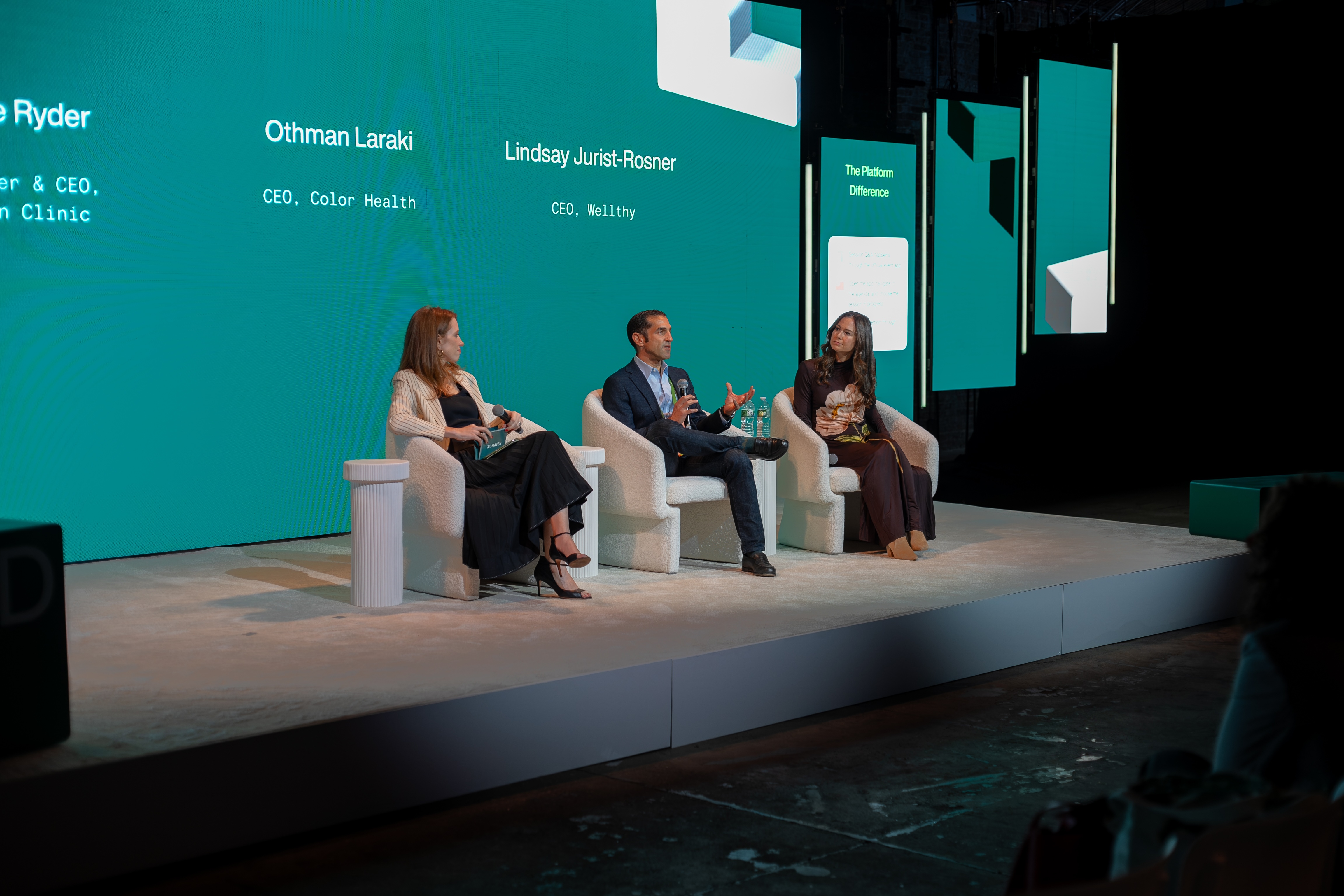
People's health needs rarely fit neatly into a single benefit category, the panelists said. Designing benefits around connected life and health needs — rather than treating each one as a separate transaction — is where a platform starts to become meaningfully different from a stack of point solutions.
What genuine integration looks like: Maven, Color, and Wellthy
Integration matters most when employees have the least capacity to navigate fragmented care. Cancer can bring urgent treatment decisions alongside questions about fertility, family and work, while caregiving can mean coordinating someone else's care alongside your own responsibilities. Having to identify and contact another provider, then explain your needs again, only adds to that burden.
Maven's partnerships with Color Health and Wellthy show that considered integration can take different forms. Maven and Color use a joint reseller model, allowing members to move between cancer and oncofertility care without restarting the intake process. Maven and Wellthy remain separately contracted but use a proactive "warm handoff" between Care Teams when a member needs caregiving support.
The structure may differ, but the principle is the same: preserve each provider's expertise while making the experience feel connected for the member.
"Doors get closed without people knowing or realizing," Laraki said, describing how easily fertility options get lost in the urgency of a cancer diagnosis. Today, when a mutual member of childbearing age is diagnosed, Maven and Color's teams coordinate directly so those options are part of the conversation from the start.
"We end up with about a 48-hour SLA on getting the follow-up consultations," Laraki said.
That same speed and care integration can help caregivers at every stage, too, Jurist-Rosner said. It also ensures that women stay on top of their own care needs, preventing more costly interventions down the line.
“Caregivers, especially women, will put their families' care needs ahead of their own, and so one of the flags that we often see, and our team is really good and really trained for, is ensuring that somebody's getting the support they need,” she said. “We see so often a woman coming to us just at her wits' end. She's contemplating a leave of absence because she's drained, she's exhausted, she has funky symptoms that she can't put her finger on, and that is our moment to show up and be there for that member.”
This responsibility to understand an employee’s care needs at all stages should fall on the employer, Jurist-Rosner said. That’s how employees can then move more seamlessly through their benefits experience.
“It puts the burden on us to know when to refer and to support and to wrap that care around the member, versus asking your employees to go back to the benefits hub and try to navigate benefits on their own,” she said. “It's on [benefits vendors] to stitch together [care] to make it really intuitive for your employees. It's not on your employees to figure out where they need to go for what at the right time."
What to ask your own vendors
As more vendors describe themselves as integrated platforms, benefits leaders should look beyond what's bundled together and ask how the experience works in practice. A few questions can help distinguish genuine integration from a stack of stitched together services:
- Can a member enter through different services and still reach the same coordinated care experience?
- What information and context follows the member as they move between programs?
- Will they need to repeat intake, their health history or their needs to a new team?
- Who is accountable for coordinating care and outcomes when multiple partners are involved?
- What happens to data when a member moves between programs?
- Does each partner retain deep clinical expertise in its specialty, and how is that expertise integrated into the wider platform?
The answers should reveal what integration actually feels like for the member — not simply how the platform is packaged or contracted.
Specialized care works better when it's connected
No single healthcare company needs to build every area of expertise in-house to deliver a connected experience. Maven's approach is to combine deep specialization with partnerships that connect members to different areas of care without leaving them to manage those transitions themselves.
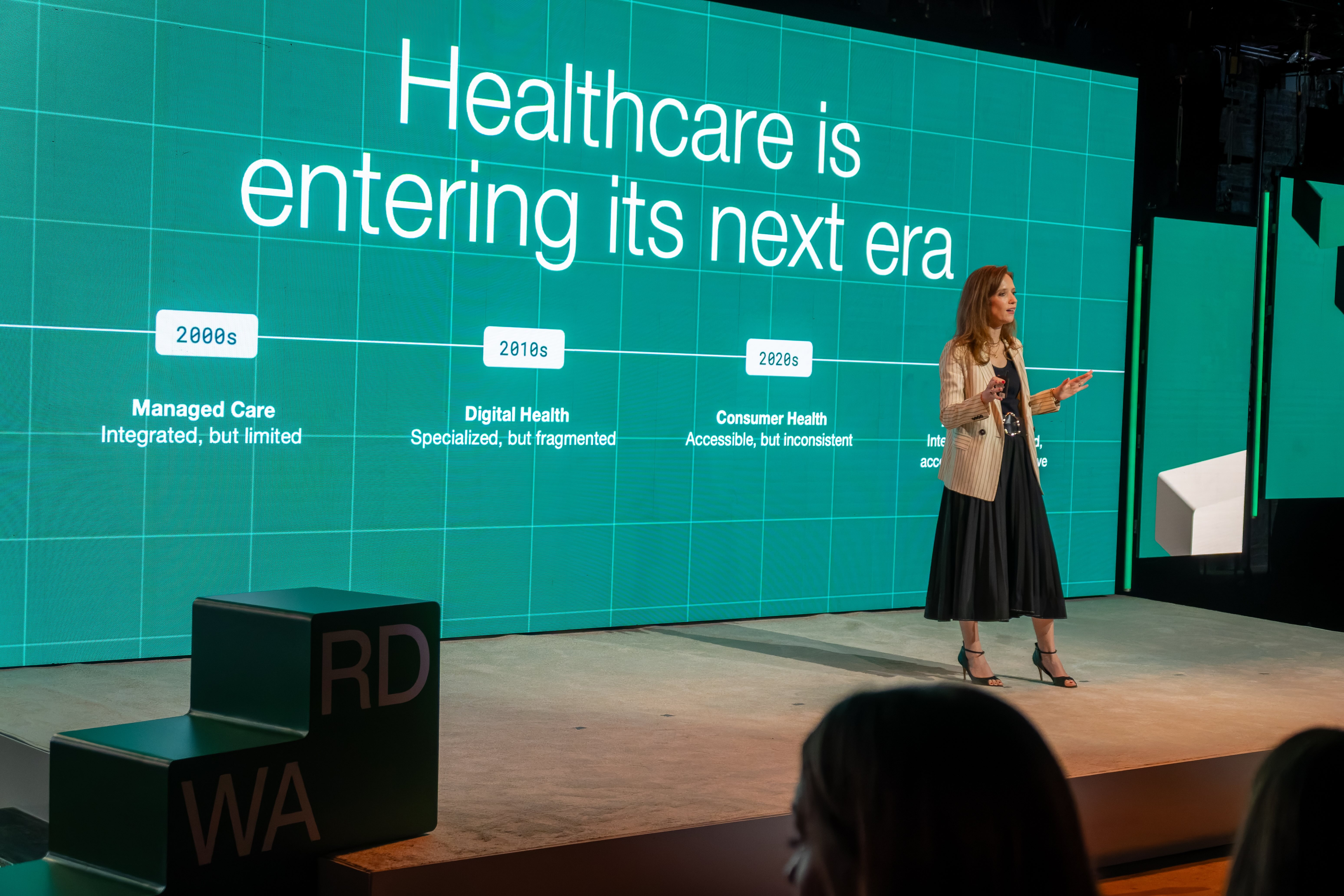
Jurist-Rosner described the goal using an analogy that was shared earlier in the day: Healthcare is an airport, with different terminals for cancer care, caregiving, and women's and family health, but one connected experience running underneath. "It's on us to put together the right airport that works for your employees," she said.
For benefits leaders, that offers a different way to think about consolidation. The goal isn't simply fewer vendors. It's a healthcare benefits ecosystem in which various services work together around the person using them.
As you evaluate your benefits strategy, consider whether your current programs simply sit alongside one another or truly connect when employees' needs overlap. Contact Maven to learn how an integrated approach to women's and family health can support your workforce.
Ready to get started with Maven?
See how Maven can support working families, retain talent, and reduce costs

.jpg)

.jpg)

.jpeg)